+86 199 4927 3927




+86 199 4927 3927


+86 199 4927 3927
Cryopump Activated Carbon for Cryopump Maintenance: South Korea Customer Case Study
Nov. 24, 2026
1. Customer Background
In June 2025, a customer in South Korea approached Xingnuocarbonfor cryopump activated carbon for specialized cryopump maintenance.
The customer was looking for coconut shell activated carbon with high adsorption potential, controlled particle sizes, low outgassing, and extremely low metal impurities for use in cryogenic vacuum systems.
In addition to adsorption performance, the customer specified a layered filling structure to balance air permeability and adsorption surface area. The activated carbon also needed to meet stringent purity requirements to minimize the risk of contamination and corrosion of the cold head.
2. Customer Requirements
The customer provided detailed technical targets for the activated carbon used in cryopump maintenance:
• Particle size: 6–8 mm for the bottom layer and 4–6 mm for the upper layer
• Iodine value: target of 1,053 mg/g
• BET specific surface area: target of 1,620 m²/g
• Hydrogen adsorption capacity: target of 124 cm³/g at 20 K
• Degassing rate: target of 4.2 × 10⁻¹¹ mbar·L/s·cm²
• Metal impurities: less than 2 ppm
• Filling method: natural settling without squeezing, after the cold head returns to room temperature
These requirements called for a coconut shell activated carbon solution that considered particle size, adsorption characteristics, material purity, and the customer's specific filling procedure.
3. Our Solution: Coconut Shell Activated Carbon for Cryopumps
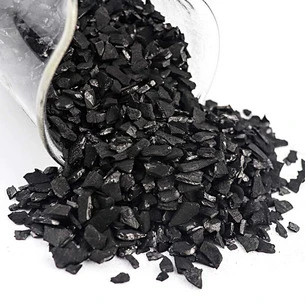
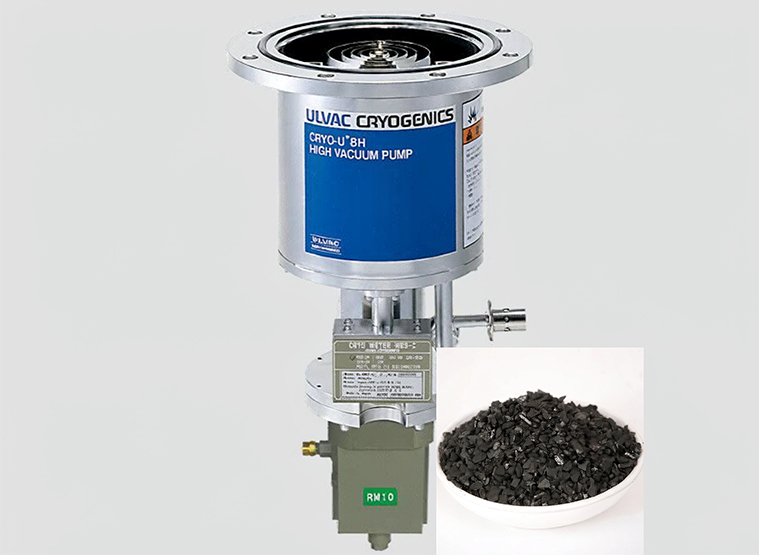
Based on the customer's application requirements, Xingnuocarbonprovided YH-CC2305-001 coconut shell-based steam activated carbon for evaluation in the cryopump maintenance application.
The product was supplied in two granular particle-size ranges, 4–6 mm and 6–8 mm, corresponding to the customer's requested upper and bottom layers.
The proposed solution focused on three technical considerations.
High Adsorption Potential
Coconut shell activated carbon features a developed porous structure suitable for adsorption applications. For this project, the customer's target iodine value, BET specific surface area, and hydrogen adsorption capacity were key parameters for evaluating the material's suitability for cryogenic vacuum systems.
Particle Sizes for Layered Filling
The available 4–6 mm and 6–8 mm granular sizes matched the customer's proposed layered filling configuration. The customer intended to use the larger particles in the bottom layer to support air permeability and the smaller particles in the upper layer to provide a higher adsorption surface area.
The specified natural-settling filling method was also taken into account in the application requirements.
Low Metal Impurity Requirements
For specialized cryopump maintenance, the customer required metal impurities below 2 ppm to minimize potential contamination and corrosion risks to the cold head.
This requirement was identified as a critical quality verification point for the selected activated carbon. Compliance with the specified threshold would need to be confirmed by the relevant analytical test results.
4. Product Specifications
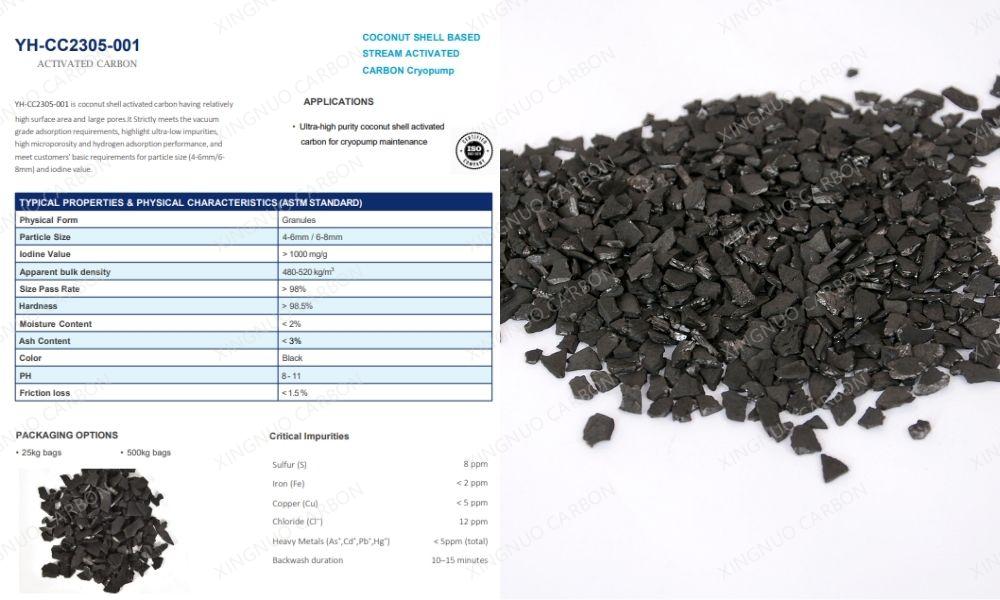
The following table summarizes the available product datasheet information and the customer's application-specific targets.
|
Parameter |
Customer Target |
Product Datasheet / Status |
|
Product Code |
— |
YH-CC2305-001 |
|
Product Type |
— |
Coconut shell-based steam activated carbon |
|
Physical Form |
— |
Granular |
|
Available Particle Sizes |
6–8 mm bottom layer; 4–6 mm upper layer |
4–6 mm / 6–8 mm |
|
Iodine Value |
Target: 1,053 mg/g |
>1,100 mg/g (datasheet) |
|
BET Specific Surface Area |
Target: 1,620 m²/g |
—* |
|
Hydrogen Adsorption Capacity |
Target: 124 cm³/g at 20 K |
—* |
|
Degassing Rate |
Target: 4.2 × 10⁻¹¹ mbar·L/s·cm² |
—* |
|
Metal Impurities |
<2 ppm |
—* |
|
Hardness |
— |
>98.5% |
|
Moisture Content |
— |
<2% |
|
Ash Content |
— |
<3% |
|
pH |
— |
8–11 |
|
Filling Method |
Natural settling without squeezing after cold head returns to room temperature |
Application requirement |
Note: Customer-specific targets are evaluation criteria and are not presented as verified product test results. Final compliance should be established through agreed testing methods and inspection reports.
*Customer target only; not stated as a verified datasheet value. Final compliance to be confirmed by agreed analytical test reports.
5. Application Considerations for Cryopump Maintenance
Selecting activated carbon for cryopump maintenance involves more than choosing a high iodine value. Particle-size distribution, adsorption performance at the operating temperature, outgassing characteristics, and material purity must also be evaluated against the requirements of the specific vacuum system.
For this South Korean project, the key evaluation points were:
• Cryogenic hydrogen adsorption: verification of the specified adsorption capacity at 20 K.
• Outgassing performance: assessment against the customer's target degassing rate under defined testing conditions.
• Layered filling configuration: confirmation of the suitability of the 4–6 mm and 6–8 mm particle sizes.
• Material purity: verification of metal impurity levels against the customer's <2 ppm requirement.
These considerations provide a technical framework for evaluating coconut shell activated carbon in specialized cryogenic vacuum applications.
6. Conclusion
This South Korean project highlights the importance of application-specific material selection for cryopump activated carbon.
By providing coconut shell-based steam activated carbon in two particle-size ranges, Xingnuocarbonaddressed the customer's proposed layered filling configuration and identified the key adsorption, outgassing, and purity parameters required for evaluation.
For customers seeking activated carbon for cryopump maintenance, matching particle size and material characteristics to the operating conditions is an important step toward selecting a suitable carbon material for cryogenic vacuum systems.
Related Products
Size: 100–325 mesh (customizable)
Used for: Wastewater treatment, decolorization, waste incineration
Size: 100×100×100 mm, 100*100*50mm,
Used for: VOC removal, exhaust gas purification, spray booths
Sizes: 1.5 mm, 2 mm, 3.0 mm, 4.0 mm, 6.0 mm
Used for: Gas purification, solvent recovery, biogas desulfurization
Size: 1.5 mm, 3.0 mm, 4.0 mm; 4×8, 8×30 mesh
Used for: H2S, acid gas, ammonia, and mercury removal
Coal-Based Tar Columnar Activated Carbon
Sizes: 1.5 mm, 2 mm, 3 mm, 4 mm, 6 mm, 8 mm, and customized sizes
Used for: Industrial waste gas treatment, solvent recovery, mercury removal, desulfurization and denitrification, gas purification
Size: 100–325 mesh (customizable)
Used for: Wastewater treatment, decolorization, waste incineration
Size: 4×8 – 12×40 mesh (GAC); 1.5 – 4.0 mm (Pellets); 200 – 325 mesh (PAC)
Used for: Industrial Gas Purification, VOC Adsorption, Wastewater Treatment, Solvent Recovery, Biogas Desulfurization, PSA Nitrogen Deoxygenation, Flue Gas Treatment
Coconut Shell Granular Activated Carbon
Size: 4-8, 6×12, 8×16, 8×30, 12×40, 30×60, 100, 200, 325 mesh (customized size available)
Used for: Drinking water and industrial water treatment, wastewater treatment, gold recovery (CIP/CIL/CIC), air purification, food and beverage decolorization, pharmaceutical purification.