+86 199 4927 3927




+86 199 4927 3927


+86 199 4927 3927
Activated Carbon for Ozone Removal: How It Works and How to Select the Right Carbon
Nov. 03, 2026
Yes. Activated carbon can remove ozone from both water and gas streams. But calling it simply “ozone adsorption” is misleading.
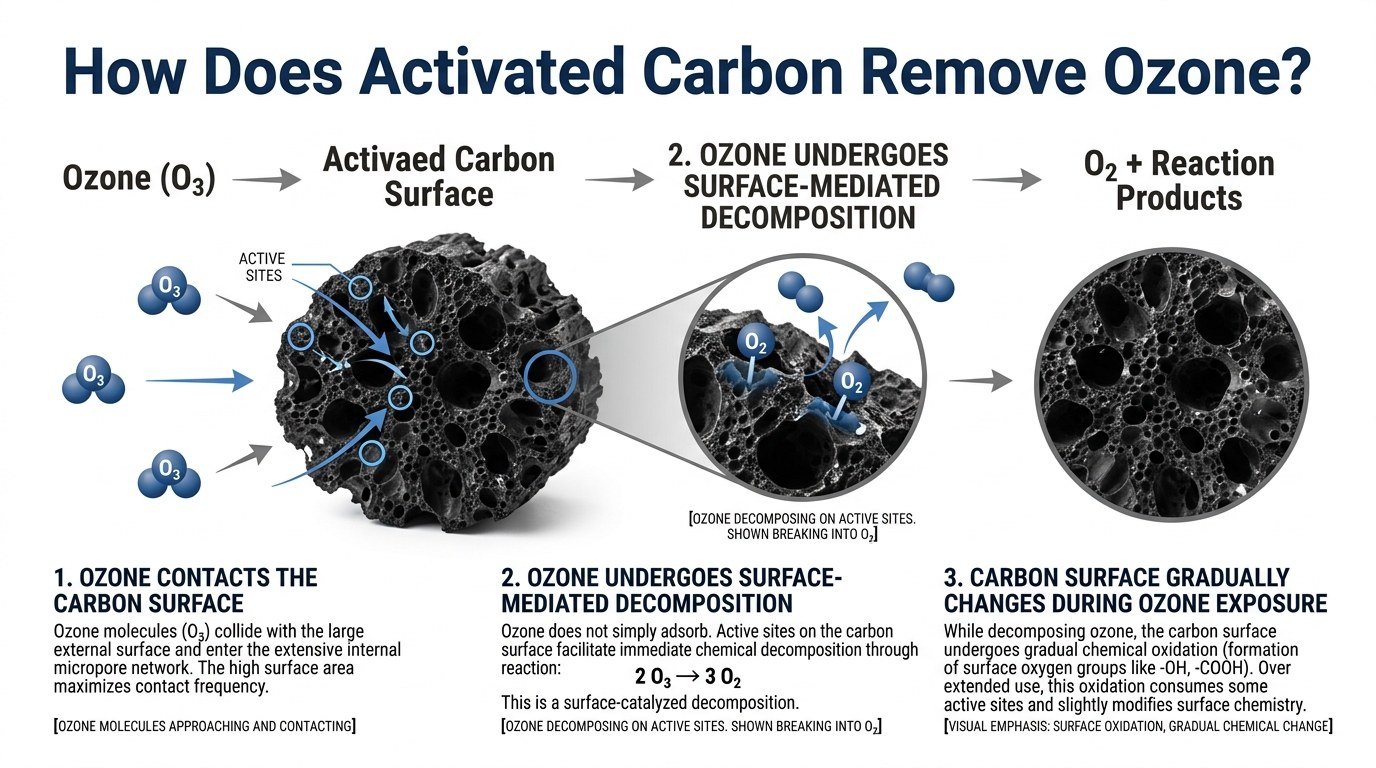
When ozone reaches the carbon surface, it reacts with the surface and breaks down. The carbon therefore acts as a reactive medium, not just a container that holds ozone inside its pores. This is also why ozone treatment is different from many conventional adsorption applications.
The catch is that ozone is a strong oxidant. Continuous ozone exposure can change the carbon surface and gradually affect its performance. So if you are selecting activated carbon for ozone removal, iodine value alone is not enough. Ozone concentration, flow rate, contact time, temperature, humidity, water quality, and the required outlet concentration all matter.
The short version is: ozone reacts with the carbon surface and decomposes.
Activated carbon has a large internal surface area and a complex pore structure, which gives ozone plenty of surface to interact with. Once ozone reaches that surface, a series of reactions can take place, eventually breaking down O₃.
This is why activated carbon is widely used downstream of ozonation, where the job is often to remove the remaining ozone before the water or gas moves to the next stage.
It Is More Than Simple Adsorption
It is tempting to describe the process as:
Ozone → adsorbed by carbon → removed
That is easy to understand, but it leaves out an important part of the chemistry.
Ozone can react with active sites and functional groups on the carbon surface. Surface-mediated decomposition becomes a major part of the removal process. The carbon is therefore participating in the reaction rather than simply storing ozone in its pores.
That distinction matters when comparing different activated carbons.
A carbon with a high iodine value or high BET surface area may have excellent adsorption capacity for many contaminants, but that does not automatically make it the best carbon for ozone decomposition.
Ozone Also Changes the Carbon
There is another side of the reaction that is sometimes left out of product articles.
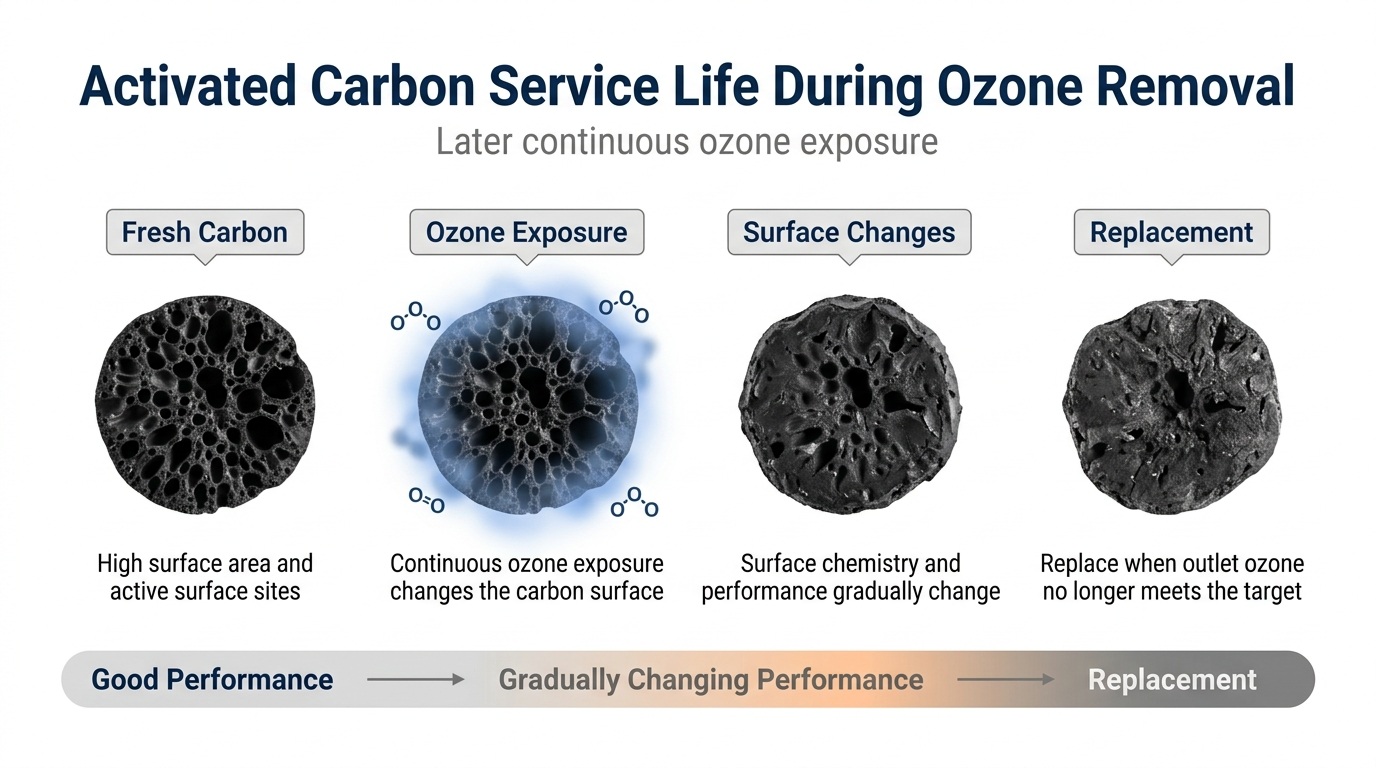
Ozone is a powerful oxidant, and the carbon surface is exposed to it continuously during operation. Over time, this can change the surface chemistry of the activated carbon.
In practical terms, the carbon bed does not remain the same from the first day of operation to the last.
The rate of change depends on the ozone loading and operating conditions. High ozone concentrations, long operating hours, and unsuitable operating conditions can shorten the useful life of the carbon.
For a real system, the important questions are therefore not only:
• How much ozone can the carbon remove?
• What is the initial removal efficiency?
You also need to ask:
• At what ozone concentration?
• At what flow rate?
• For how long?
• What outlet ozone concentration is required?
• How does performance change over time?
Those questions are much more useful when selecting carbon for an industrial system.
One of the most common uses is removing residual dissolved ozone after an ozonation stage.
A simplified process looks like this:
Water → Ozone Contact → Residual Ozone → GAC Filter → Downstream Process
The ozone does its job first, such as oxidizing contaminants or helping with disinfection. The GAC stage then deals with the ozone that remains in the water.
Depending on the process, ozone followed by activated carbon may be found in:
• Drinking water treatment
• Bottled water production
• Beverage and process water
• Aquaculture
• Advanced wastewater treatment
• Water reuse
• Post-ozonation polishing
The reason for adding carbon after ozone is not always the same.
In some systems, the main target is simply residual ozone. In others, the GAC stage also provides additional removal of organic compounds, taste and odor compounds, or other trace contaminants.
That difference affects carbon selection.
Dissolved ozone concentration is one of the first numbers to look at. A small residual ozone polishing duty is obviously different from a system dealing with a much higher ozone load.
Flow rate matters because it determines how quickly water passes through the carbon bed.
EBCT (Empty Bed Contact Time) is another key parameter. A carbon bed that is too small for the flow may not provide enough contact time, even if the carbon itself has good ozone decomposition characteristics.
Water chemistry also matters. pH, temperature, organic matter, and other dissolved substances can affect ozone decomposition and the way ozone interacts with the carbon.
So there is no sensible answer to the question:
“What EBCT should I use for ozone removal?”
without knowing what is actually coming into the carbon bed.
The situation changes when ozone is in a gas stream.
Typical applications include:
• Ozone generator off-gas
• Ozone destruct systems
• Laboratory exhaust
• Industrial exhaust
• HVAC and indoor air
• Process ventilation
Here, the carbon bed has to deal with moving gas rather than water. Gas velocity, pressure drop, temperature, and humidity become much more important.
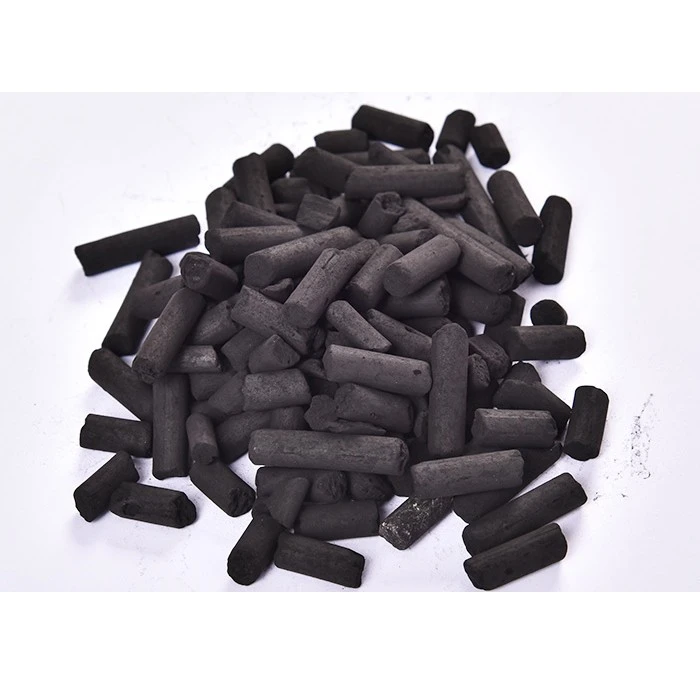
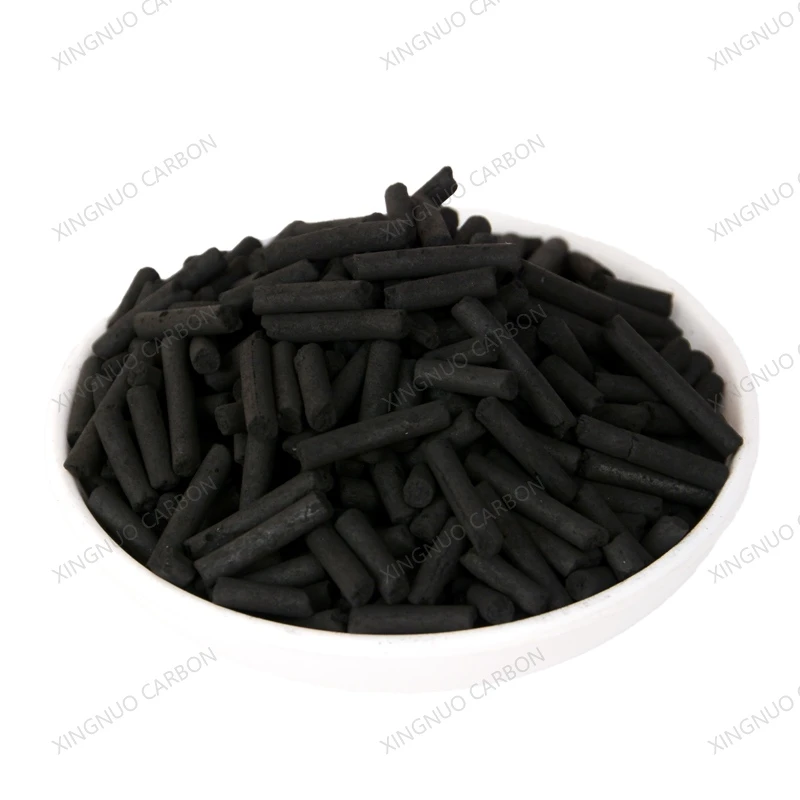
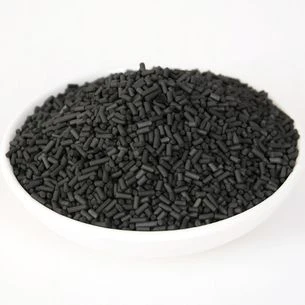
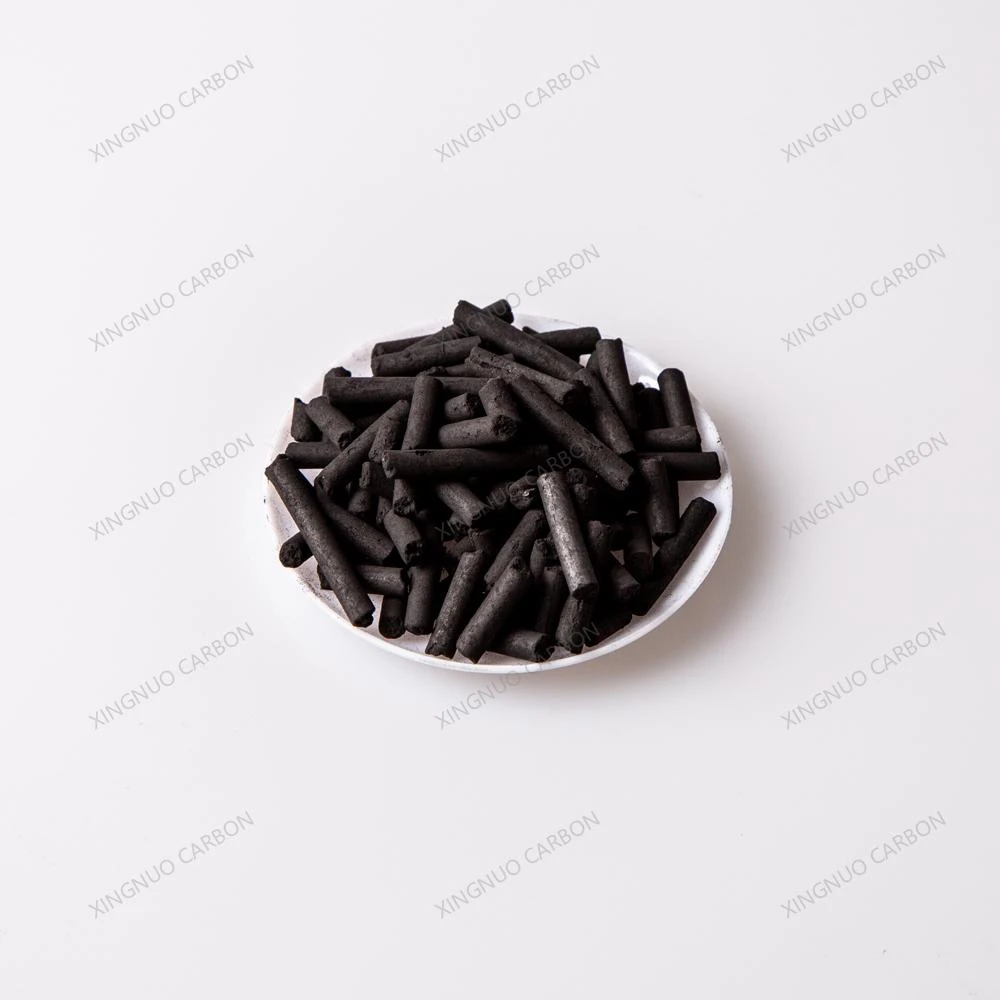
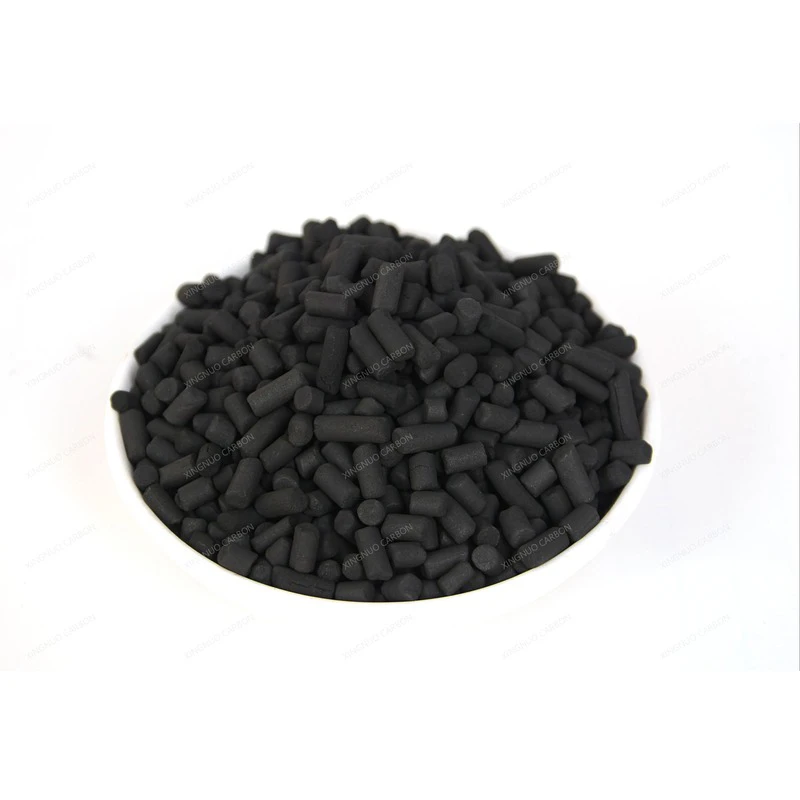
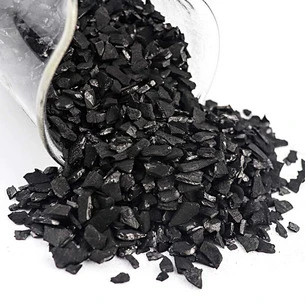
Both granular and pelletized activated carbon can be used in fixed-bed gas treatment, but the better choice depends on the equipment and operating conditions.
| Factor | GAC | Pelletized Activated Carbon |
| Particle shape | Irregular granules | Cylindrical pellets |
| Typical use | Fixed-bed filters | Fixed-bed gas systems |
| Pressure drop | Depends on particle size and bed design | Often easier to control with uniform pellets |
| Gas flow | Suitable for many applications | Well suited to continuous gas flow |
| Mechanical strength | Grade dependent | Often suitable for packed gas beds |
| Key selection factors | Carbon properties, particle size, bed depth | Carbon properties, pellet size, bed depth |
There is no rule saying pellets are always better than GAC.
For a gas system, the more useful approach is to look at the complete set of operating conditions: ozone concentration, gas flow, temperature, humidity, required outlet concentration, and available bed dimensions.
A technically good carbon in the wrong bed design can still give you a bad result.
There is no single specification that defines a “best ozone removal carbon.”
For ozone applications, several carbon properties need to be considered together.
| Carbon Property | Why It Matters |
| Surface chemistry | Strongly affects ozone-carbon reactions |
| Pore structure | Determines available surface and transport characteristics |
| Surface area | Provides surface for interaction with ozone |
| Ash content | Can affect carbon surface behavior and water quality |
| Particle size | Influences pressure drop and contact conditions |
| Mechanical strength | Important in fixed-bed systems |
| Moisture | Particularly relevant in gas-phase applications |
| Manufacturing process | Can influence the final surface characteristics |
Not necessarily.
Iodine value is useful when evaluating activated carbon, especially for applications where micropore adsorption is important. But ozone removal is not simply an iodine-value competition.
Two carbons with similar iodine values can behave differently when exposed to ozone because their surface chemistry and physical characteristics are different.
So if a supplier tells you:
“Our carbon has an iodine value of 1,100 mg/g; therefore it is the best for ozone removal.”
That is not enough information to make an engineering decision.
For ozone applications, the carbon's behavior under the actual operating conditions matters much more.
This is where laboratory test results and plant performance can start to look very different.
Ozone Concentration
The higher the inlet ozone concentration, the greater the ozone loading on the carbon.
A carbon bed used to polish a small residual ozone concentration in treated water is not facing the same duty as a carbon bed treating concentrated ozone generator off-gas.
High ozone loading can also accelerate changes to the carbon surface.
Flow Rate and Contact Time
Flow rate determines how quickly ozone passes through the carbon bed.
For a fixed-bed system:
EBCT = Empty Bed Volume ÷ Flow Rate
If the flow increases while the bed volume stays the same, contact time decreases.
But don't take EBCT out of context. No universal EBCT number works for every ozone application. It has to be considered together with ozone concentration, carbon characteristics, temperature, water or gas composition, and the required outlet concentration.
Temperature
Temperature can affect ozone decomposition and the reactions taking place at the carbon surface.
For gas-phase systems, temperature also needs to be considered from an operational and safety perspective, particularly when ozone concentration and loading are high.
Humidity
Humidity is especially important for gas-phase ozone removal.
Water vapor can change the conditions at the carbon surface and influence ozone-carbon reactions. A carbon that performs well in a dry laboratory test may not behave exactly the same way in a humid industrial exhaust stream.
Water Quality
For water treatment, the carbon is dealing with much more than ozone.
pH, temperature, dissolved organic matter, suspended solids, and other contaminants can all affect the process.
This is one reason why pilot testing can be useful for larger or more demanding ozone removal systems.
These two processes are related, but they are not the same thing.
If the purpose of the GAC bed is mainly to remove residual ozone, the carbon is being used as an ozone decomposition medium.
A BAC system has a broader job.
A typical ozone-BAC process looks like:
Ozonation → Organic compounds are oxidized → More biodegradable compounds are formed → BAC biodegradation
BAC, or biological activated carbon, is GAC that supports biological activity on the carbon surface.
In this configuration, ozone helps transform some organic compounds into forms that are easier for microorganisms to degrade. The BAC stage then provides biological polishing.
So:
Ozone + GAC
and
Ozone + BAC
should not be treated as two names for the same technology.
If your only requirement is to reduce residual ozone before the next process step, you may not need a biological treatment stage at all.
This is probably one of the most difficult questions to answer with a single number.
There is no reliable “replace the carbon every six months” rule that applies to all ozone systems.
Carbon life depends on the actual ozone loading and operating conditions, including:
• Inlet ozone concentration
• Gas or water flow rate
• Operating hours
• Carbon bed volume
• Contact time
• Temperature
• Relative humidity for gas applications
• Water quality for liquid applications
• Required outlet ozone concentration
• Carbon characteristics
A low-load polishing system may have a very different carbon life from a high-load ozone off-gas system.
The better approach is to monitor outlet performance and establish the replacement point from operating data.
For important systems, testing the selected carbon under representative conditions can give a much better indication of expected service life than a generic figure from a product catalogue.
Activated carbon can be a practical choice when you need to reduce ozone to a defined outlet concentration and the ozone loading is suitable for a carbon-based treatment stage.
Typical situations include:
• Residual ozone removal from treated water
• Post-ozonation polishing
• Ozone generator off-gas treatment
• Industrial gas treatment
• Fixed-bed ozone removal systems
• Applications where additional adsorption of other contaminants is useful
But activated carbon is not a universal answer.
For very high ozone concentrations, high-temperature gas streams, or applications with an extremely high continuous ozone load, another ozone destruction technology—or a combination of technologies—may make more sense.
The right question is not:
“Can activated carbon remove ozone?”
It is:
“Can activated carbon reduce this ozone load to my required outlet concentration at an acceptable operating cost?”
That is the question worth answering before buying a truckload of carbon.
Before asking a carbon supplier for a recommendation, collect the basic operating data.
At minimum, provide:
1. Application: water or gas
2. Inlet ozone concentration
3. Flow rate
4. Required outlet ozone concentration
5. Operating temperature
6. Relative humidity for gas applications
7. pH and basic water quality for liquid applications
8. Carbon bed dimensions, if an existing system is being used
9. Operating hours per day
10. Existing carbon specification, if available
For gas systems, particle or pellet size and pressure drop should also be considered.
For water systems, EBCT, bed depth, hydraulic loading, and water quality are particularly important.
If you already have an operating system, giving the supplier actual inlet and outlet ozone data is even better than simply saying:
“I need activated carbon for ozone removal.”
That information allows the carbon grade and system requirements to be evaluated against the real application rather than a generic specification sheet.
Choosing carbon for ozone removal is not simply a matter of finding the highest iodine value or the largest surface area.
Start with the process conditions: What is the ozone concentration? What is the flow rate? Is it water or gas? What outlet concentration do you need? How much contact time and carbon volume are available?
Once those questions are answered, the appropriate carbon form, particle size, bed configuration, and performance requirements become much easier to determine.
Xingsen supplies granular and pelletized activated carbon for industrial water and gas treatment applications. If you are evaluating activated carbon for ozone removal, providing the actual operating conditions allows the carbon grade to be assessed against the application rather than relying on a generic specification sheet.
A: When selecting activated carbon for ozone removal, consider ozone concentration, flow rate, contact time, temperature, humidity, water quality, and the required outlet concentration, as these factors significantly affect carbon performance.
A: No, iodine value alone is not sufficient. While it indicates surface area and porosity, the specific conditions of your application, including ozone exposure, are crucial for determining the appropriate activated carbon.
A: We offer a variety of activated carbon products designed for ozone removal, ensuring optimal performance based on your specific application requirements.
A: Continuous exposure to ozone can gradually alter the carbon surface, diminishing its performance. Therefore, regular assessment and potential replacement should be planned based on the specific exposure conditions.
A: Yes, we can provide samples for evaluation purposes. Please contact us to discuss your specific needs and arrange for a trial.
Need activated carbon?
Get Factory-Direct Pricing — No Middlemen
20+ years manufacturing. MOQ 1 ton. Free samples. Reply within 2 hours.
What is your MOQ?


Usually our MOQ is 1 ton for bulk order. If for yourself use or need a small quantity, I suggest you buy it localy which is more economical
What after-sales services do you provide?
We have a technical departmen that can provide free technical guidance, f you have any usage problems after purchase please contact us freely
How long is your delivery time?
We have sufficient stock in our warehouse and can usually be delivered within 7-15 days.
How do you ensure product quality?
We have an independent quality inspection department Each batch of products must inspected at all levels during the production process Only the products that pass the inspection can eave the factory for sale.
What is your payment method?
Usually we accept TT payment, please contact our sales manager for specific details.
Do you provide samples?
Yes, samples within 1kg is free, but customers should afford the export shipping cost.
Related Products
Size: 100–325 mesh (customizable)
Used for: Wastewater treatment, decolorization, waste incineration
Size: 100×100×100 mm, 100*100*50mm,
Used for: VOC removal, exhaust gas purification, spray booths
Sizes: 1.5 mm, 2 mm, 3.0 mm, 4.0 mm, 6.0 mm
Used for: Gas purification, solvent recovery, biogas desulfurization
Size: 1.5 mm, 3.0 mm, 4.0 mm; 4×8, 8×30 mesh
Used for: H2S, acid gas, ammonia, and mercury removal
Coal-Based Tar Columnar Activated Carbon
Sizes: 1.5 mm, 2 mm, 3 mm, 4 mm, 6 mm, 8 mm, and customized sizes
Used for: Industrial waste gas treatment, solvent recovery, mercury removal, desulfurization and denitrification, gas purification
Size: 100–325 mesh (customizable)
Used for: Wastewater treatment, decolorization, waste incineration
Size: 4×8 – 12×40 mesh (GAC); 1.5 – 4.0 mm (Pellets); 200 – 325 mesh (PAC)
Used for: Industrial Gas Purification, VOC Adsorption, Wastewater Treatment, Solvent Recovery, Biogas Desulfurization, PSA Nitrogen Deoxygenation, Flue Gas Treatment
Coconut Shell Granular Activated Carbon
Size: 4-8, 6×12, 8×16, 8×30, 12×40, 30×60, 100, 200, 325 mesh (customized size available)
Used for: Drinking water and industrial water treatment, wastewater treatment, gold recovery (CIP/CIL/CIC), air purification, food and beverage decolorization, pharmaceutical purification.