+86 199 4927 3927




+86 199 4927 3927


+86 199 4927 3927
10 Key Quality Control Points in Activated Carbon Production
Nov. 06, 2026
Many customers will first ask, "What is your iodine value?"
However, anyone with experience using activated carbon knows that quality cannot be judged by a single parameter. Two batches of activated carbon, both with an iodine value of 1000 mg/g, can perform drastically differently in real-world applications. One batch might maintain stable performance for six months, while the other might begin to degrade in just three months. Some products will have low pressure and produce no powder during backwashing, while others will immediately generate sludge, leading to system blockage.
The root of these discrepancies lies not in lab reports, but in critical control points throughout the production process. Activated carbon is a process-driven product, and its quality depends on decisions made at every stage, from raw material selection to final product packaging. The following 10 key quality control points are essential for producing truly industrial-grade, reliable activated carbon suitable for export markets.
The foundation of high-quality activated carbon lies in the selection of raw materials. Different raw materials—such as coconut shell, coal-based, or wood-based—inherently differ in density, structure, and ash content.
Ash content: High ash content will reduce adsorption capacity and shorten the product's lifespan.
Hardness: Low hardness increases the risk of particle breakage during backwashing or conveying.
Porosity potential: The natural structure of the raw material largely determines the porosity development after activation.
Batch consistency is equally important. Differences in raw material origin, harvest season, or supplier can all lead to fluctuations in product performance. Without consistent raw material quality, even the most rigorously controlled production processes cannot produce uniform activated carbon.
Key takeaway: Stable, high-quality raw materials determine the upper limit of the final product's adsorption capacity and mechanical strength.
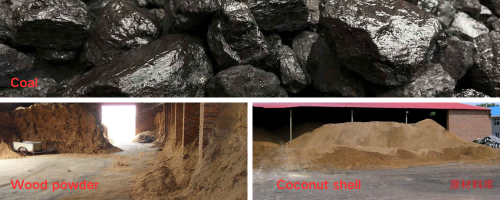
Pretreatment may seem like a routine task, but it is the first and most important step in quality control. Proper pretreatment can ensure uniform carbonization and reduce defects in the final product.
Moisture control: Excessive moisture in the raw materials can lead to uneven heating during carbonization, resulting in insufficient or excessive carbonization of the particles.
Particle size distribution: Uneven particle size can lead to inconsistencies during the activation process, thus affecting adsorption performance.
Remove impurities: Dirt, sand, and metallic contaminants increase ash content and reduce performance in sensitive applications such as water treatment or food-grade activated carbon.
Cutting corners in the pretreatment process often leads to instability in downstream processes, including inconsistent pore development and changes in mechanical strength.
Carbonization transforms raw materials into carbon, forming the structural framework of activated carbon.
Key parameters include:
Temperature range: Too low a temperature will reduce the strength of carbon materials; too high a temperature will damage the structure of carbon materials.
Heating rate: Heating too fast can cause cracking; heating too slowly may waste energy and time.
Maintaining time and endpoint determination: Time itself cannot guarantee quality; the carbonization endpoint must be verified through material condition and gas release.
Incorrect carbonization can lead to:
Poor porosity
Uneven activation
Reduced mechanical strength
Effective carbonization requires process control based on observation and data, rather than a fixed schedule.
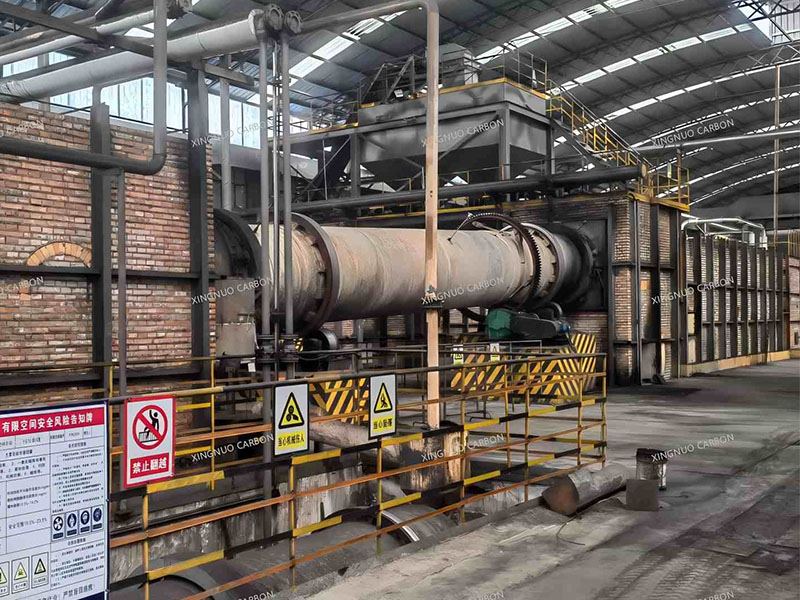
Activated carbon's functional properties.
Physical activation and chemical activation: Each method has different requirements for temperature, time, and activator.
Pore development: Activation produces micropores and mesopores, which are crucial for adsorption capacity.
Avoid over-activation: Over-activation increases pore volume but weakens particle strength, leading to powdering and shortened lifespan.
The goal is to achieve maximum adsorption capacity while maintaining mechanical stability, which is particularly important for applications such as water treatment and industrial gas adsorption.
The effectiveness of activated carbon depends on its pore size distribution:
Micropores: crucial for adsorbing small molecules such as chlorine or organic pollutants in water.
Mesoporous structures are important for larger molecules and faster adsorption kinetics.
Large pores: promote fluid flow in the packed bed and reduce pressure drop.
For example, coconut shell activated carbon is highly favored in water purification due to its naturally formed microporous structure, which is ideal for removing organic compounds, while coal-based activated carbon may be more suitable for gas-phase applications. Choosing the appropriate pore structure based on application requirements is crucial for maximizing efficiency.
The performance of activated carbon is typically evaluated in a laboratory setting, but its effectiveness in real-world applications is paramount. During use, activated carbon granules must withstand the following tests:
Impact of Packaging and Filling
Backwashing in water treatment systems
Long-term flow wear
Insufficient strength will lead to:
Powder Formation
Increased pressure drop
Decreased adsorption efficiency
Balancing mechanical strength and adsorption capacity is crucial for industrial and municipal water treatment systems.
Although ash and impurities are invisible to the naked eye, they have a profound impact on performance:
High ash content reduces adsorption capacity.
Certain metals or minerals can contaminate treated water.
Compliance issues can arise in food, beverage, and pharmaceutical applications.
Ash sources include raw materials, processing residues, and post-treatment contaminants. Discovering excessive ash levels only after production is often too late to correct, making process control crucial.
Particle size directly affects:
System voltage drop
Flow distribution
Adsorption kinetics
Consistent particle size ensures reliable operation of equipment such as industrial towers, water treatment beds, and gas adsorption towers. Variations in particle size lead to uneven flow rates and reduced efficiency, which is unacceptable to customers in the long term.
Commonly used parameters include:
iodine value
methylene blue adsorption
Surface area
CTC (carbon tetrachloride active)
Ash and moisture content
No single parameter can guarantee its applicability. Testing must be application-oriented to ensure that activated carbon meets the specific requirements of water purification, air filtration, or industrial processes.
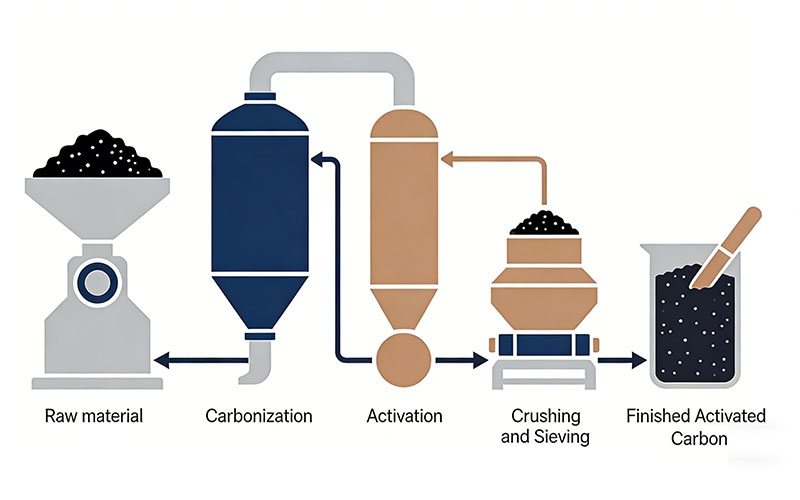
For exporters and industrial customers, batch consistency is more important than price. A reliable traceability system can achieve the following:
Quickly identify problems
Process repeatability
Building trust with long-term clients
The lack of consistency has led to customers being unwilling to sign multiple contracts, thus limiting business growth.
Activated carbon is a process-driven product, not a parameter-driven one. True quality control is reflected in every detail of production, from raw material selection to final packaging.
For export markets and industrial applications, stable performance, proper pore structure, and mechanical durability are the true indicators of quality. Customers understand this; they just won't say it outright.
1. What factors have the greatest impact on the quality of activated carbon?
The most critical factors include raw material quality, carbonization control, activation conditions, and batch consistency. If these process steps are not properly controlled, performance cannot be guaranteed based solely on laboratory test results.
2. Does a higher iodine value mean better performance of activated carbon?
No. A higher iodine value indicates more micropores, but over-activation can reduce mechanical strength and shorten service life. The optimal iodine value depends on the specific application.
3. Why do two types of activated carbon with the same iodine value have different properties?
Because adsorption performance is affected by factors such as pore structure distribution, ash content, particle strength, and uniformity, rather than just a single parameter.
4. How does the type of raw material affect the performance of activated carbon?
Different raw materials result in different pore structures. For example, coconut shell activated carbon is typically rich in micropores, making it suitable for water treatment, while coal- based activated carbon may perform better in gas-phase applications.
5. What role does carbonization play in activated carbon production?
Carbonization forms the carbon framework. Insufficient carbonization leads to structural instability, uneven activation, and reduced mechanical strength, problems that cannot be completely remedied later.
6. Why is the ash content in activated carbon important?
High ash content reduces adsorption capacity and may introduce impurities into the treated water or air. Low ash content is particularly important for water treatment, food-grade, and pharmaceutical applications.
7. How does particle size uniformity affect application performance?
Inconsistent particle size can lead to uneven flow, increased pressure drop, and reduced adsorption efficiency, especially in fixed-bed systems.
8. What causes activated carbon to produce excessive fine powder or dust?
Excessive fine powder is usually caused by over-activation, low hardness of raw materials, or insufficient control of mechanical strength during production.
9. Are laboratory test results sufficient to evaluate the quality of activated carbon?
Laboratory testing is necessary, but not sufficient. Field performance depends on process control, pore structure matching, and mechanical durability, factors that cannot be fully reflected in standard laboratory data.
10. Why is batch consistency critical for long-term supply?
Batch consistency ensures predictable performance and system stability. Batch inconsistency increases operational risk and discourages customers from long-term cooperation.
Related Products
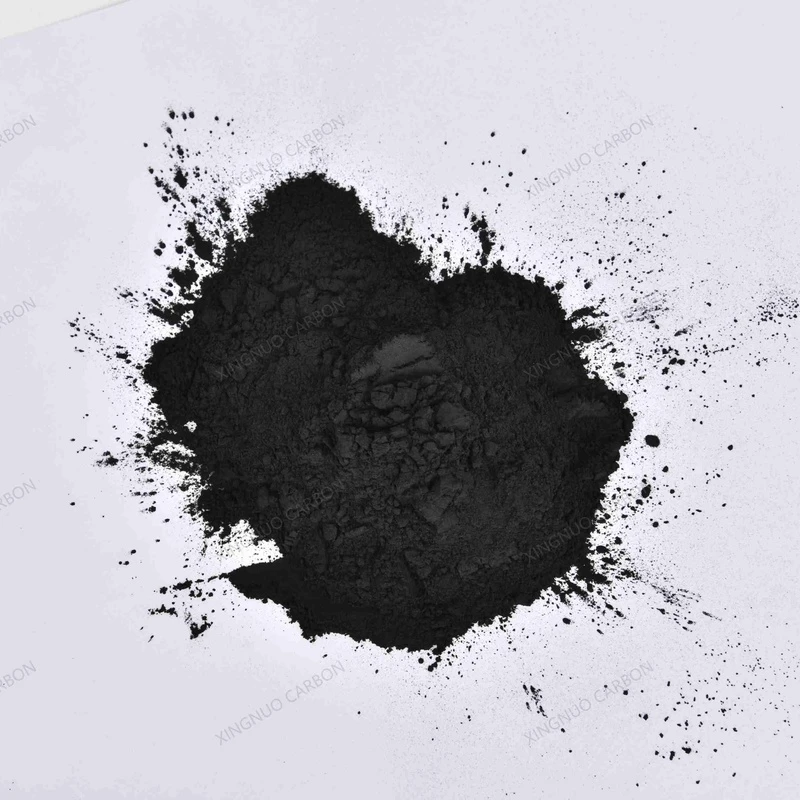
Size: 100–325 mesh (customizable)
Used for: Wastewater treatment, decolorization, waste incineration
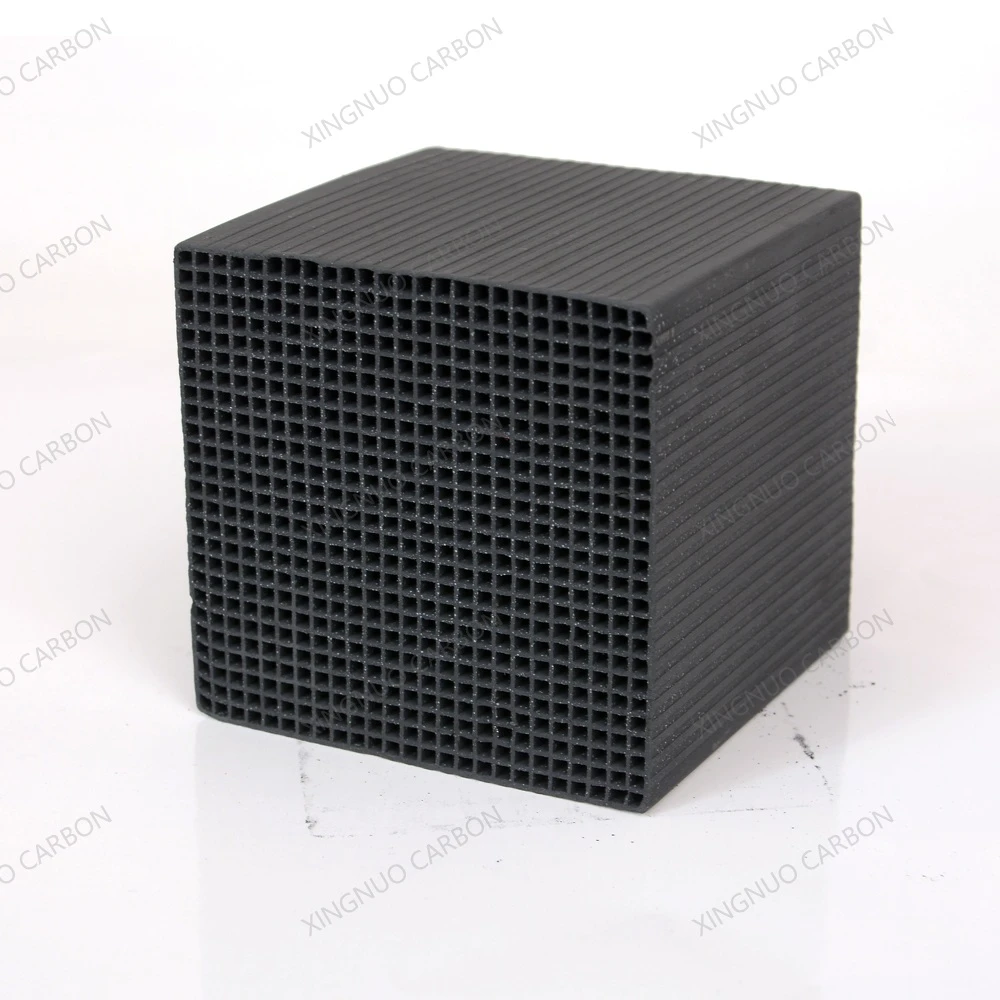
Size: 100×100×100 mm, 100*100*50mm,
Used for: VOC removal, exhaust gas purification, spray booths
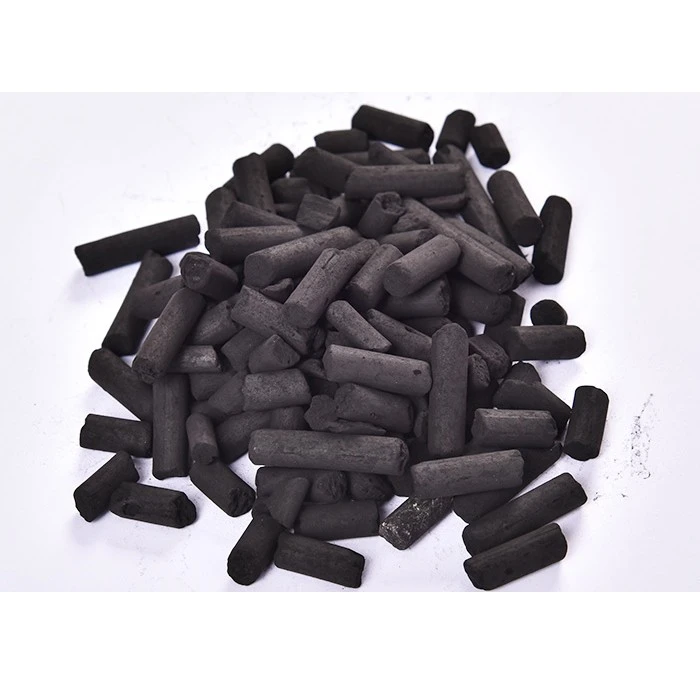
Sizes: 1.5 mm, 2 mm, 3.0 mm, 4.0 mm, 6.0 mm
Used for: Gas purification, solvent recovery, biogas desulfurization
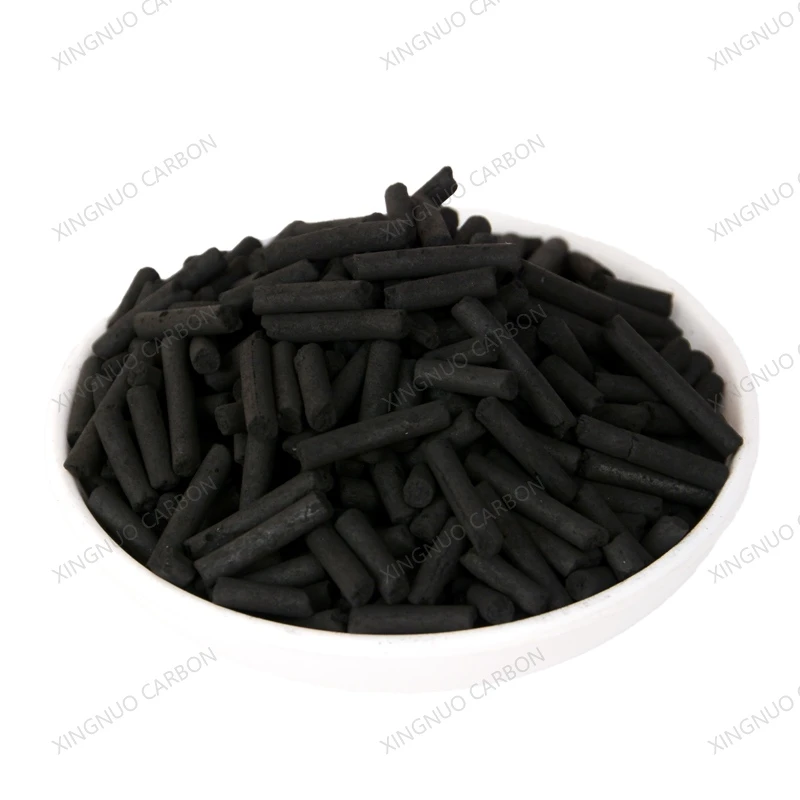
Size: 1.5 mm, 3.0 mm, 4.0 mm; 4×8, 8×30 mesh
Used for: H2S, acid gas, ammonia, and mercury removal
Coal-Based Tar Columnar Activated Carbon
Sizes: 1.5 mm, 2 mm, 3 mm, 4 mm, 6 mm, 8 mm, and customized sizes
Used for: Industrial waste gas treatment, solvent recovery, mercury removal, desulfurization and denitrification, gas purification
Size: 100–325 mesh (customizable)
Used for: Wastewater treatment, decolorization, waste incineration
Size: 4×8 – 12×40 mesh (GAC); 1.5 – 4.0 mm (Pellets); 200 – 325 mesh (PAC)
Used for: Industrial Gas Purification, VOC Adsorption, Wastewater Treatment, Solvent Recovery, Biogas Desulfurization, PSA Nitrogen Deoxygenation, Flue Gas Treatment
Coconut Shell Granular Activated Carbon
Size: 4-8, 6×12, 8×16, 8×30, 12×40, 30×60, 100, 200, 325 mesh (customized size available)
Used for: Drinking water and industrial water treatment, wastewater treatment, gold recovery (CIP/CIL/CIC), air purification, food and beverage decolorization, pharmaceutical purification.